The view from Monterubbiano does the impossible thing of being in two directions at once. To the east, the Adriatic — a thin stripe of blue that appears and disappears between the hills. To the west, the Sibillini Mountains, known locally as the monti azzurri, the blue mountains, for the particular haze that settles around them in summer. You are at four hundred metres above sea level, and the world seems to have arranged itself specifically for this vantage point.
This is where Casa della Nonna Elsa is. Not nearby, not a short drive away — here, in Monterubbiano, a medieval village in the province of Fermo that has been standing on this hill since the year 1000.
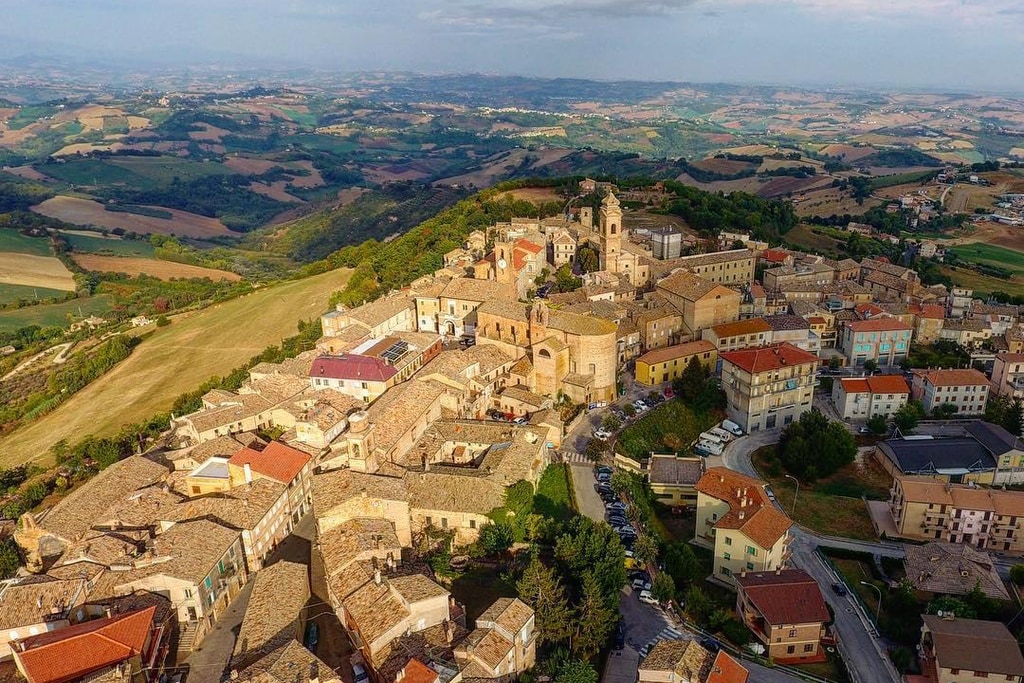
Monterubbiano and the hills of Le Marche. Photo: casainpaese.it
A village that has earned its orange flag
The Touring Club of Italy awards its Bandiera Arancione — orange flag — to small inland villages of particular quality. Monterubbiano has one. It's the kind of recognition that doesn't change the place but confirms what anyone walking through it already senses: this is somewhere that has been genuinely looked after. The medieval centre is intact. The streets are clean without being sanitised. People actually live here.
Origins go back to the year 1000. Most of the old fortifications are gone — Francesco Sforza built the city walls in 1433, and sections still stand, along with the Cassero, the old defensive tower — but what remains of the medieval structure is well preserved: the Romanesque-Gothic Palazzo Comunale from the 1300s, two ancient entrance gates (Porta del Pero and Porta San Basso), and ten churches with varying degrees of grandeur and obscurity.
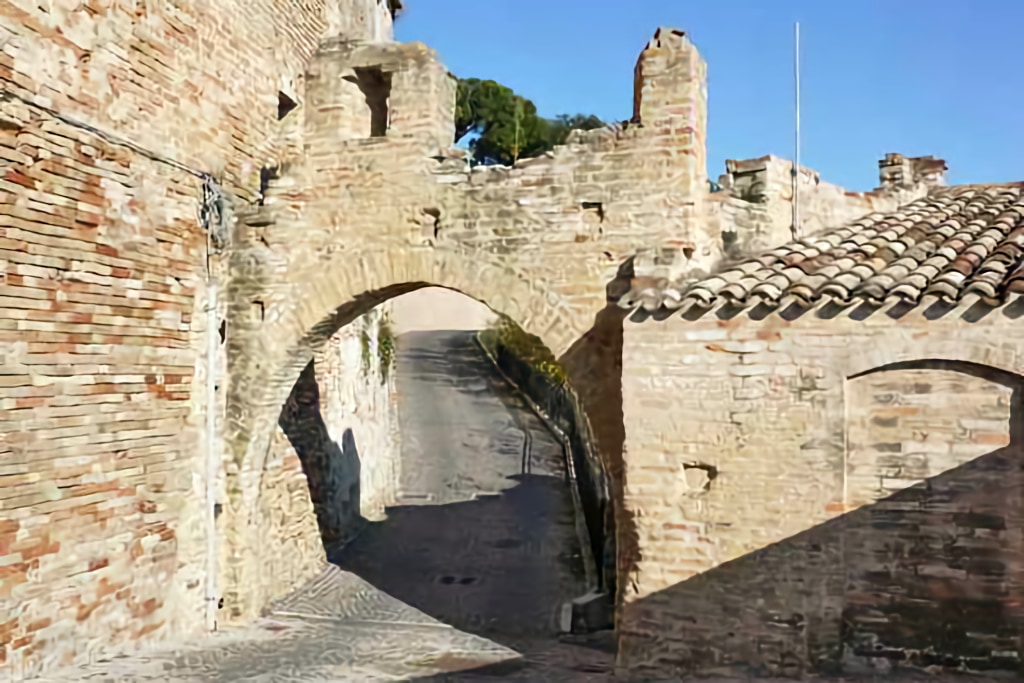
The city walls, built by Francesco Sforza in 1433. Photo: casainpaese.it
What to see
The churches are the main reason to walk slowly. The Collegiata — formally Santa Maria dei Letterati — is the most important: it contains a painting and three tablets by Vincenzo Pagani, the local Renaissance painter who also gives the village theatre its name. The thirteenth-century church of SS. Giovanni Battista e Evangelista has frescoes from the fourteenth, fifteenth, and sixteenth centuries layered over each other in the way that only happens when a building has been loved and repainted and loved again over several hundred years.
The Polo Culturale San Francesco, in the old convent of the same name (twelfth century), now houses the civic archaeological museum, a library, a didactic laboratory, a congress hall, and a botanical garden. It's the kind of cultural centre that a village of this size shouldn't really have — which is precisely why it's worth visiting.
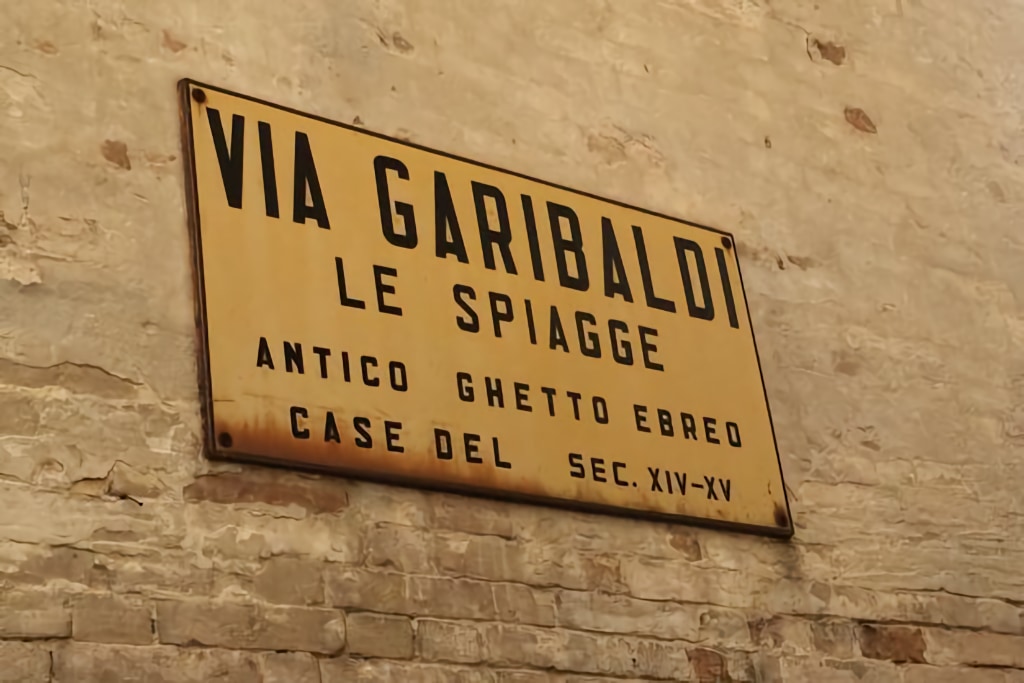
The Jewish Ghetto, dating from the sixteenth century, is a reminder that Monterubbiano was once part of a wider network of small Jewish communities in the Marche region — a history that is easy to miss and worth knowing.
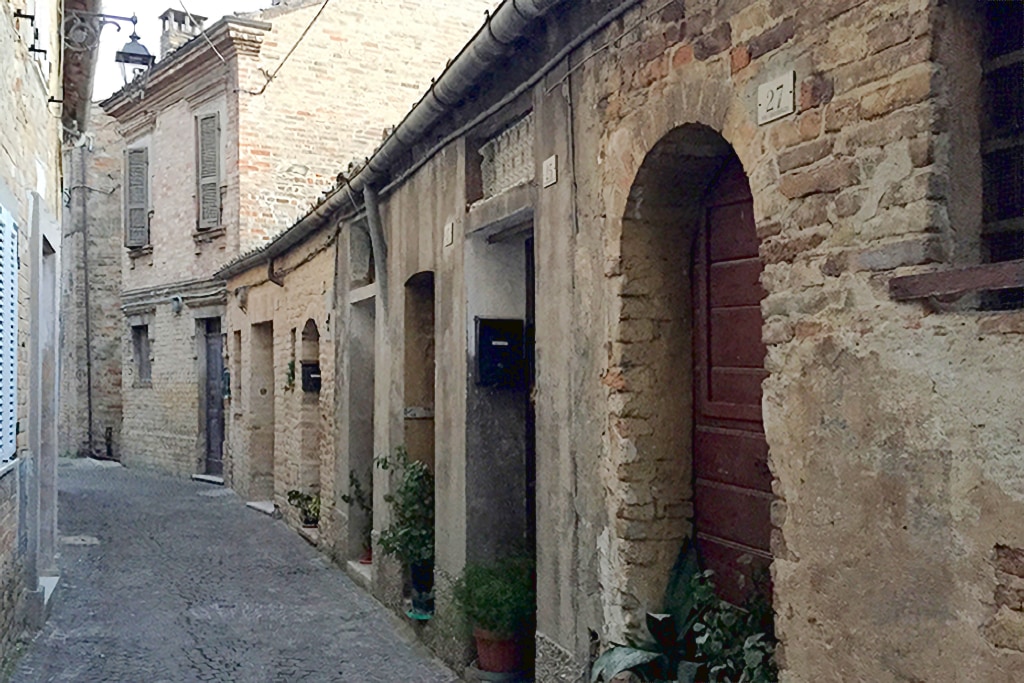
The Jewish Ghetto, sixteenth century. Photo: casainpaese.it
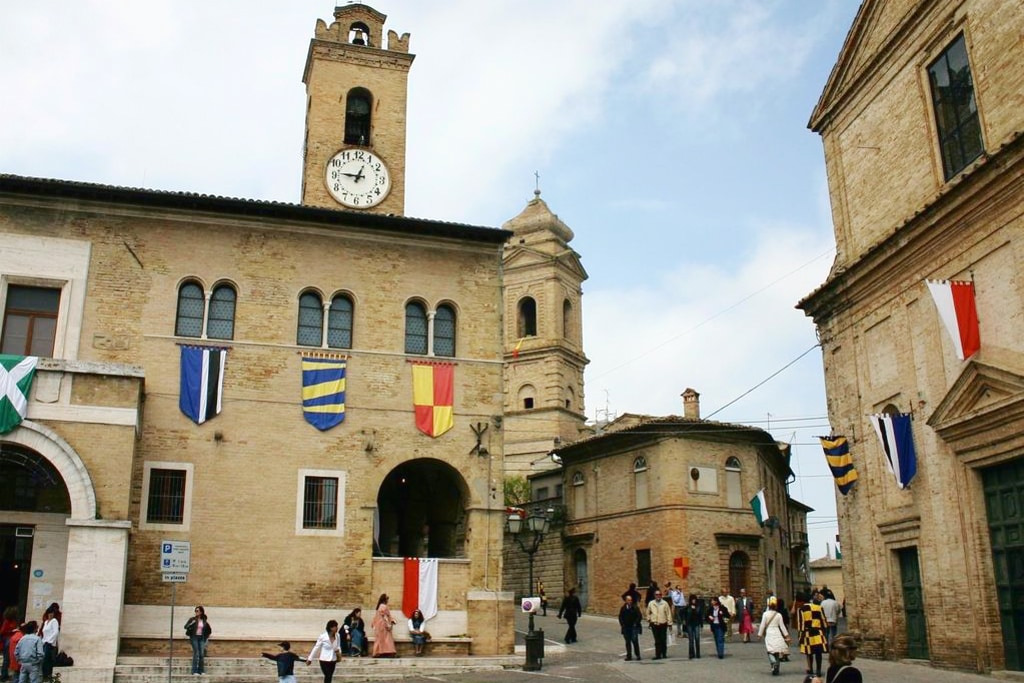
The main piazza. Photo: casainpaese.it
Sciò la Pica — the woodpecker festival
Every year around Pentecost, Monterubbiano re-enacts Sciò la Pica — one of the more unusual festivals in the region. The name means roughly "fly, woodpecker" (pica in the local dialect), and the event commemorates the ancient legend of the Sabine tribes who, so the story goes, followed a woodpecker through the mountains into the Marche, eventually settling and founding the Picene civilisation.
The re-enactment weaves together that pagan origin story with later religious meaning, in the way that Italian festivals often do — treating several centuries of history as simultaneous rather than sequential. It's festive and strange and rooted in something real. Worth visiting if you're here in early June.
From the hill, the Adriatic is always visible. Photo: casainpaese.it
Where to eat — and what to eat
Monterubbiano feeds you well if you know where to look.
In the village centre: Sfoglia e Mattarello, a pasta shop that makes fresh pasta daily and sells local specialties including tagliatelle fritte (fried tagliatelle — a Le Marche thing, inexplicably delicious), fried olives, and fried cream. Le Fornare is the bakery: bread, pizza, and local sweets of the kind that bakeries in places like this have been making for generations.
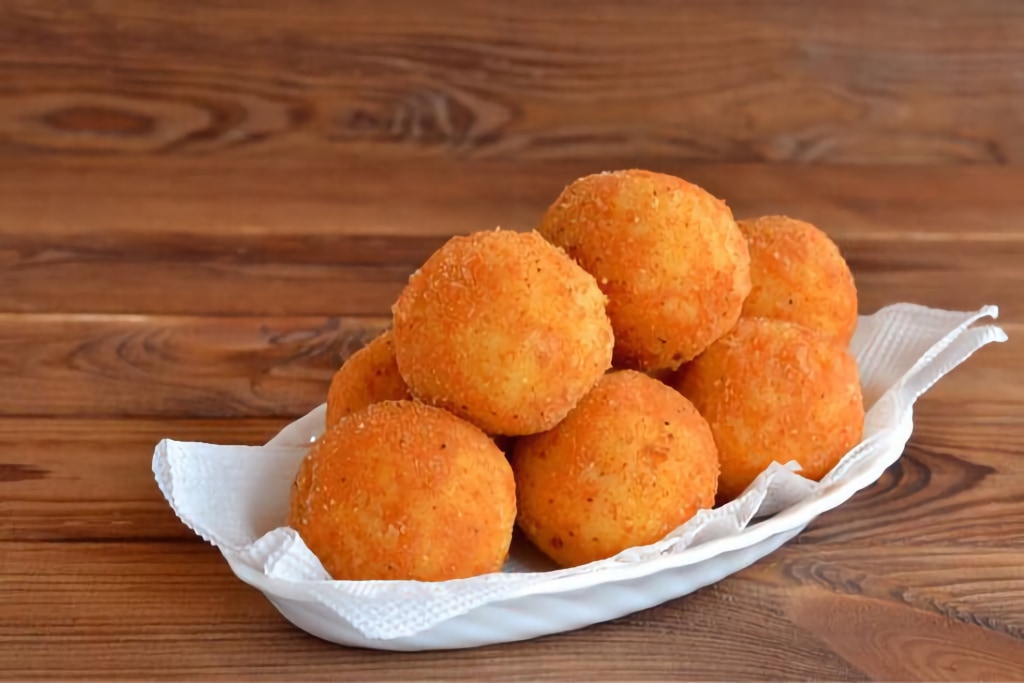
Tagliatelle fritte — the local specialty you didn't know you needed. Photo: casainpaese.it
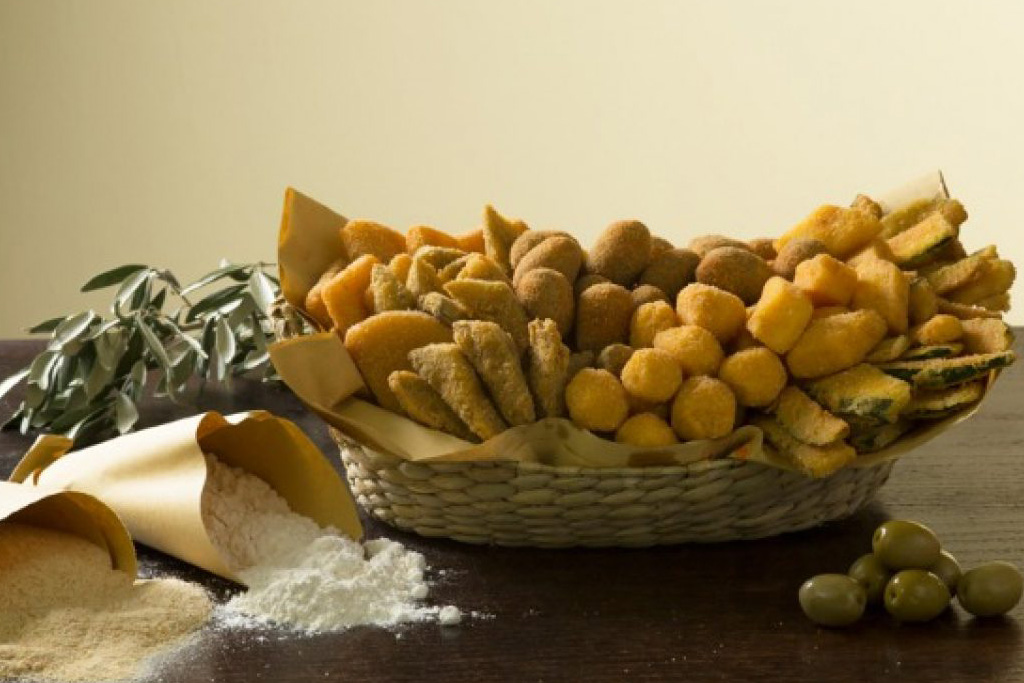
Olive ascolane and fried cream. Photo: casainpaese.it
For a proper meal: Il Coccaro is in the Parco di San Rocco, with a panoramic terrace and local specialties. VIN'S is a newer place near the centre serving natural wines alongside good food. A kilometre away in the village of Moresco — worth visiting in its own right, a piazza that looks like a film set — 10_83.moresco is the local restaurant that people in the area have been talking about.
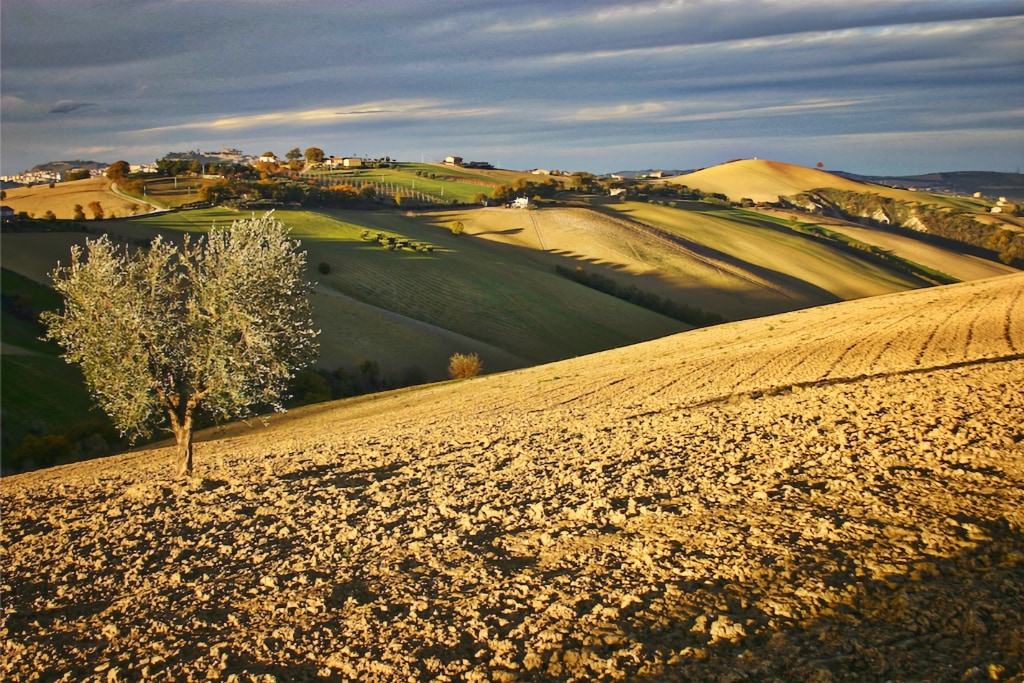
The countryside around Monterubbiano. Photo: casainpaese.it
What it feels like to be here
Monterubbiano is not a destination in the tourist-industry sense. There are no guided tours, no hop-on-hop-off anything, no particular infrastructure for visitors. What there is, is a village that goes about its business — the bar opens at seven, the bakery at eight, the piazza fills up around six in the evening and empties after dinner.
The pace is genuinely slow in a way that isn't performed. People sit outside. Cats appear on windowsills. The light in the evening, when it catches the stone walls and the hills beyond, is the kind of thing you don't photograph properly and remember for years.
Casa della Nonna Elsa is here, in this village. A 350 m² house with four bedrooms, fireplaces, and a terrace that faces the hills. Seventeen minutes from the sea; everything else is on the doorstep.
Information about Monterubbiano's history and points of interest based on casainpaese.it/monterubbiano. All photos courtesy of casainpaese.it.