From Gelsomoro, the sea is two kilometres away. You can see it from the terraces — that flat silver line below Torre di Palme, the Adriatic stretching east toward Croatia. Porto San Giorgio is what you reach when you go down the hill.
It's a working town. A proper fishing harbour, a medieval castle right on the waterfront, a long promenade lined with century-old palm trees, and a daily rhythm that belongs to the sea rather than to tourism. It is not, in other words, a resort. Which is precisely what makes it worth knowing.
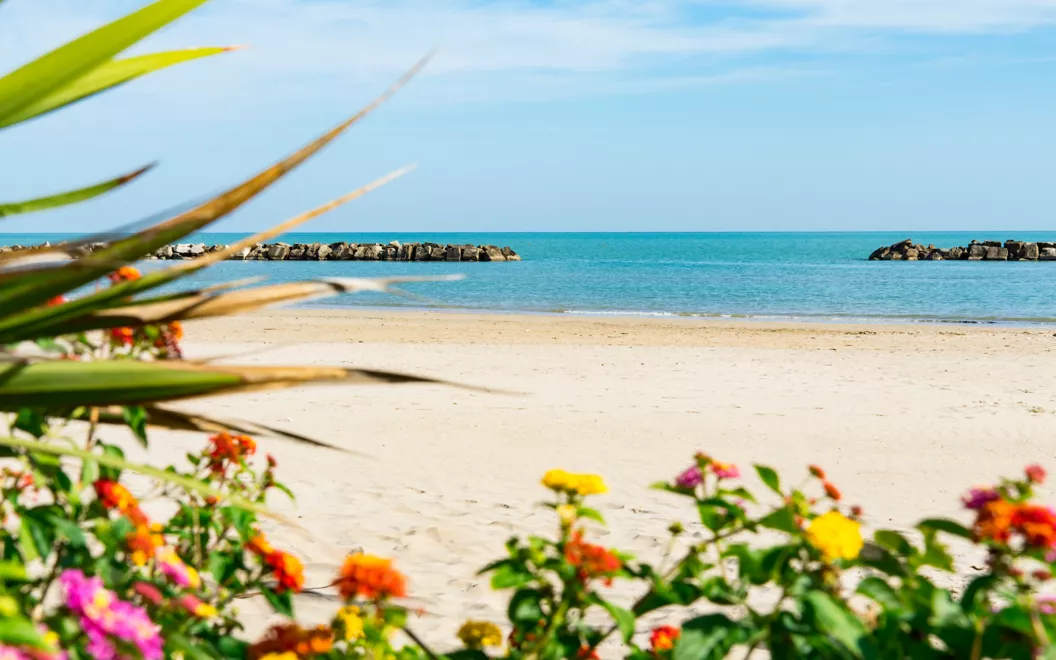
Porto San Giorgio, Le Marche. Photo: italia.it
The beach and the Blue Flag
Porto San Giorgio's beach is long — several kilometres of fine sand running south from the castle, lined with the palms that give the promenade its particular character. The town holds the Bandiera Blu — the Blue Flag certification that signals clean water and well-maintained beaches, awarded annually by the Foundation for Environmental Education.
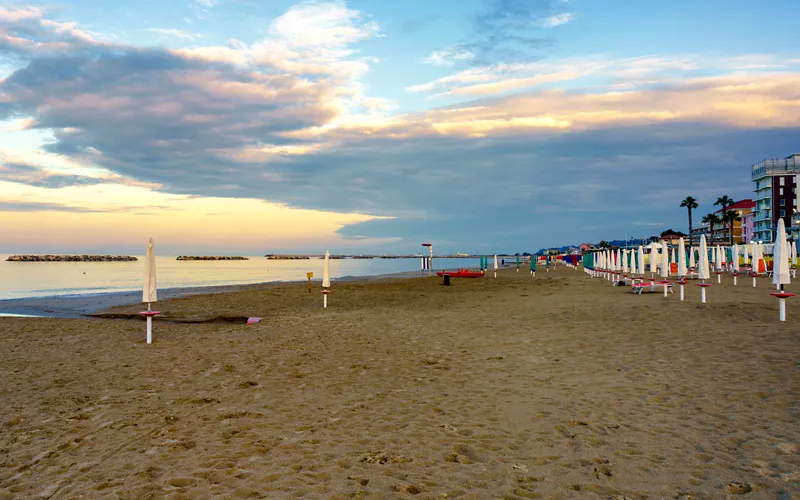
Blue Flag beach and century-old palms. Photo: italia.it
The beach has the organised Italian beach club structure (stabilimenti balneari) for most of its length, with sun loungers, umbrellas, showers and bars. There are also free sections (spiagge libere) for those who prefer to arrive with a towel and nothing else. There's even a dedicated family area — Piazza Bambinopoli — with facilities for children.
The sea here is calm and clear. The kind of beach where you stay four hours when you planned to stay two.
The castle
The Castello Malatestiano sits at the northern end of the seafront, just where the harbour begins. Built in the fifteenth century by the Malatesta lords of Rimini — the great maritime dynasty of the Adriatic — it's an angular, fortress-like structure with towers and battlements that look out over the water.
A fifteenth-century castle, on the beach, with fishing boats moored a hundred metres from its walls. In summer it hosts exhibitions and cultural events. In winter it belongs to the seagulls.
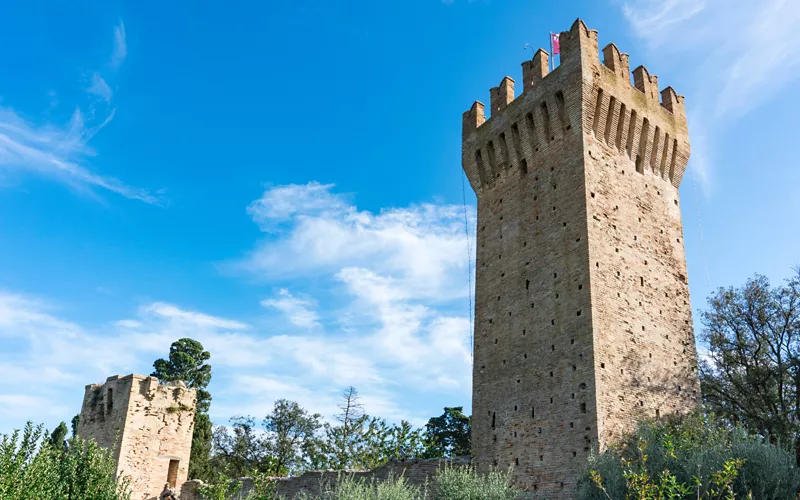
The historic and cultural heritage of Porto San Giorgio. Photo: italia.it
What to eat: garagoli and brodetto
The fish here is the point. The harbour and the restaurants are in direct conversation — the catch comes in early morning, and the daily menus in the port-side restaurants follow accordingly.
Two things not to miss: garagoli (small Adriatic sea snails, typically boiled in salted water or with white wine and herbs, eaten with a toothpick) and brodetto di pesce — the Le Marche version of fish stew, made with local catch, tomato, vinegar and plenty of saffron. Every port town on the Adriatic has its brodetto, and Porto San Giorgio's is among the finest.
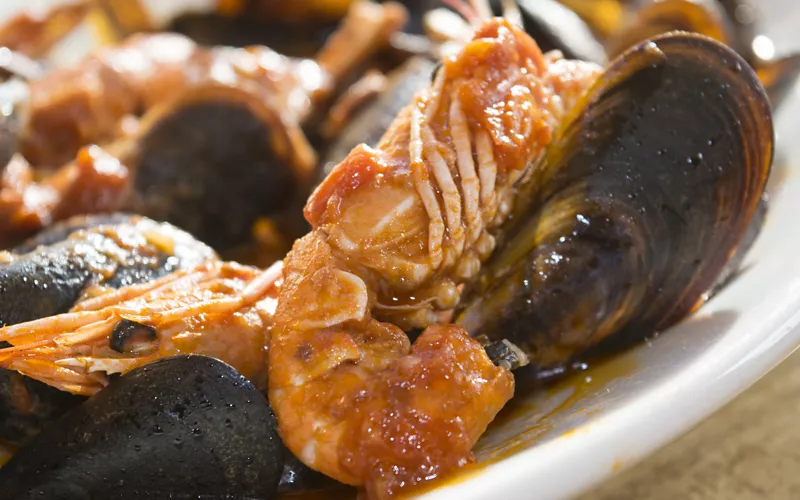
Garagoli and brodetto di pesce — don't leave without trying both. Photo: italia.it
For a more local experience, the indoor market and the streets around the old town have alimentari, bakeries and small bars where the locals eat lunch. Look for places with handwritten daily menus.
Events
Porto San Giorgio has an active summer calendar — concerts, theatre performances and local festivals through July and August. The seafront promenade becomes animated until midnight, the restaurants fill up, and the town takes on the particular energy of Italian summer on the coast.

Summer events on the Porto San Giorgio seafront. Photo: italia.it
June and September are the right answer if you want the sea without the crowd. The water is still warm in September — sometimes warmer than July — and the restaurants are calmer and at their best.
Getting there from Gelsomoro
Porto San Giorgio is two kilometres downhill from Torre di Palme — a five-minute drive, a twenty-five minute walk if you take the path through the olive groves. Parking along the promenade and near the harbour is easiest in the morning before the beach fills up.
By train, Porto San Giorgio is a stop on the Adriatic coastal line (Ancona–Pescara): useful if you're arriving from further afield.
Porto San Giorgio
Province of Fermo · Le Marche
2 km from Gelsomoro · 5 minutes by car